
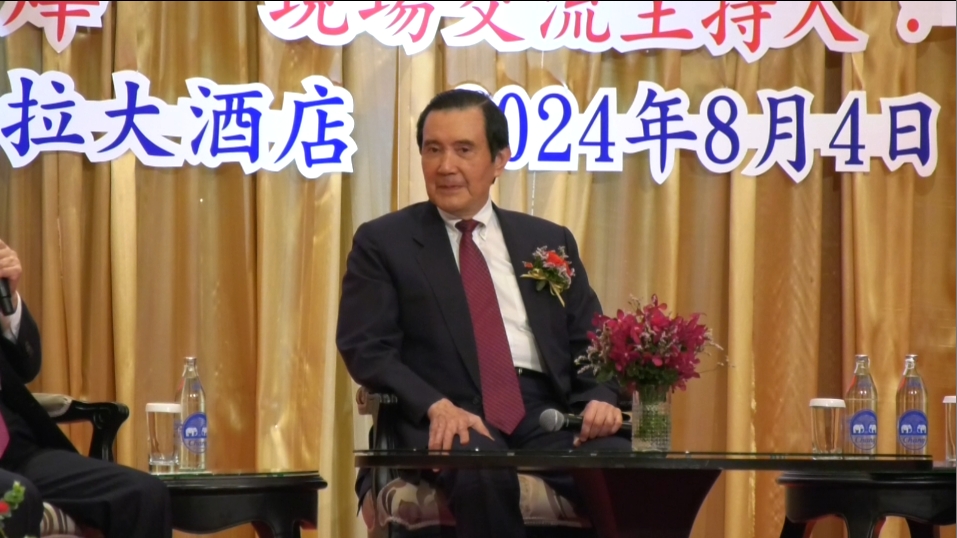

Former Taiwanese President Ma Ying-jeou has blamed rising cross-strait tensions on President Lai Ching-te’s “two nations theory” and has expressed strong objection to any foreign interference in developments between Taiwan and mainland China.
“Lai’s cross-strait policy is seriously risky. Taiwan’s independence is impossible and it has worried a lot of people in Taiwan,” Ma said in an exclusive interview with Thai PBS World.
Ma was in Bangkok over the weekend, on his second visit to Thailand after his trip to Mae Sot in 1996, to speak at an event organised by the Chinese Association of Thailand, on his views on the cross-strait relationship.
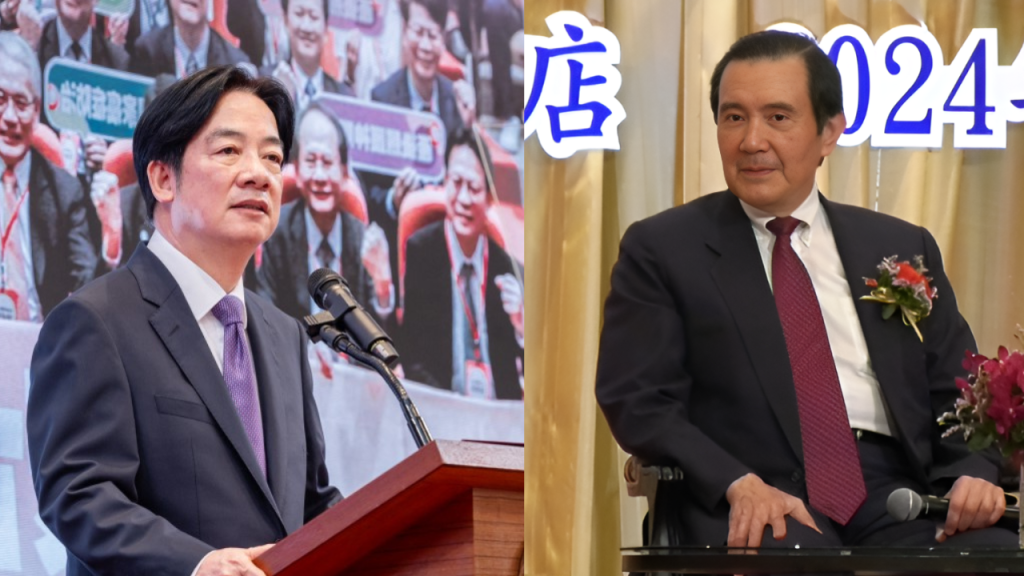
Left to right, incumbent President, Lai Ching-te, and former President Ma Ying-jeou
The former Taiwanese leader criticised Lai and the ruling Democratic Progressive Party (DPP) for abandoning the “one China with different interpretations” position and adopting what is known as “a new theory of two nations”, which he said is exacerbating tensions in the strait.
While the Chinese military has violated Taiwan’s airspace and marine territory, Ma emphasised that rebuilding communications via intergovernmental organisations is key to de-escalation, adding that closer cooperation and cohesive communication with China are needed to re-establish regular exchanges in politics, trade and education, as seen during his tenure from 2008 to 2016.
During his visit to Beijing, and meeting with President Xi Jinping in April this year, Ma said he emphasised the so-called “3P” conditions; peaceful coexistence, peaceful development and peaceful unification.
Ma, whose cross-strait policy facilitated the first meeting of political leaders from both sides since the end of Chinese Civil War, said democracy is the core value that needs to be recognised for reunification to occur.
In a survey, conducted in 2023 by Taiwan’s Mainland Affairs Council, 88.5% of respondents said they were in favour of the status quo. Ma said that, while he believes unification is inevitable, he admitted that the survey results indicate that the process would take time before there is a consensus on both sides.
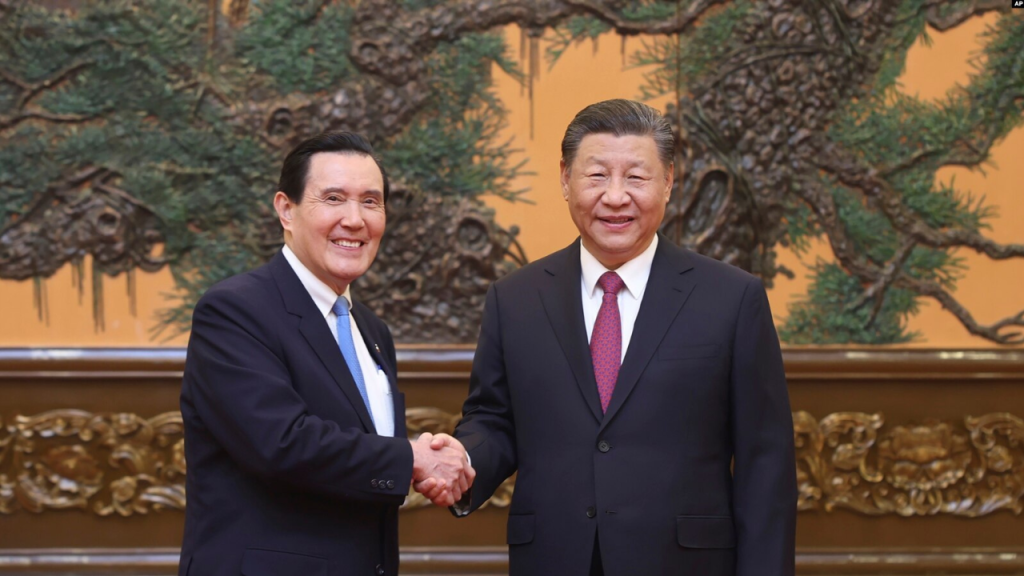
Former Taiwan President Ma Ying-jeou shakes hands with Chinese leader Xi Jinping in Beijing on 10 April, 2024.
“The first step is peaceful coexistence. Then, gradually we move towards peaceful development. When the time is right, we can consider unification, but it will take many years. Only by establishing stable relations can we achieve what the Taiwanese people want. They are accustomed to a democratic way of life and would not be ready to accept anything else,” Ma said.
With increasing confrontations between China and the United States, Ma said foreign forces should not intervene in the cross-strait issue, which should be decided only by the citizens on both sides.
Ma said he believes that, without interference from outside, Taiwan and China can resolve their differences with mutual benefit and prosperity, warning against manipulation that could lead to a proxy war in the strait.
“A third country should not get involved in developments between Taiwan and mainland China. I think we can handle the issue very well because we understand the other side, and they understand us,” Ma stated.
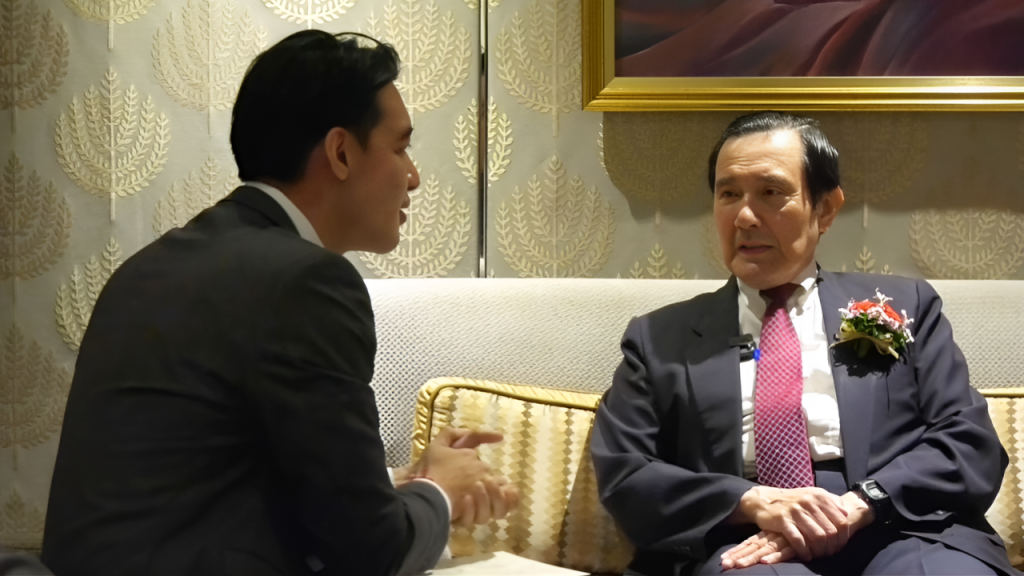
Left to right, Franc Han Shih and Ma Ying-jeou
In his speech to the Chinese Association of Thailand, Ma reiterated his desire to see peaceful unification and believed that a war is unlikely at this stage.
By Franc Han Shih, Thai PBS World
Photos by AFP, AP, and the Chinese Association of Thailand

